
Welcome to the September Central East ICB stakeholder newsletter, providing an update on important developments in the area we serve – Bedfordshire, Hertfordshire, Cambridgeshire and Milton Keynes.
Primary care appointments
New data from NHS England show that general practices in the Central East area offered more than 5,480,000 appointments between May and July 2026, an increase of over 396,000 (7.8%) compared with the same period a year earlier.
From May to July 2026, on the average weekday, more than 85,600 people had an appointment with a healthcare professional in general practice, compared with around 79,400 a year earlier.
This means that every day, 1 in every 41 of the 3.52m people registered with a general practice in the Central East area had an appointment in primary care. More information is available on our website.

Five things you need to know from the September ICB Board meeting
The Board was presented with the annual reports and accounts for the three predecessor ICBs. Jan Thomas, Chief Executive Officer, reflected on a year where the three bodies had been brought together into one new ICB, against a backdrop of rising demand and increasing expectations from both government and patients. The Board heard that there was a strong financial base for the new ICB, given that the three predecessors had each met all financial obligations, but that the overall position for 2026/27 remained challenging. Commissioning intentions for 2027/28 will be published once these have been finalised.
The Board heard stories from three families relating to end-of-life care and the work undertaken in Bedfordshire, in partnership with Keech Hospice. The programme brings together hospices, primary and urgent care, ambulance services and specialist clinicians, helping patients access co-ordinated advice and the right care in their preferred setting, when they need it. Rapid assessment, medication, equipment and specialist support, either at home or in hospital, were helping to give dignity, comfort and support for families, all accessed via the NHS 111 phone line. In reflecting the ICB’s approach that “quality is the strategy” Sarah Stanley, Executive Clinical Director, noted that the response from patients and families had been very positive, and the number of complaints received about end-of-life care had fallen. The aspiration is to widen the approach to the whole of the Central East area.
The first quarterly update on the ICB’s nine priority programmes was presented (from page 37 of this link). These are the areas set out in the Our Way strategy. Delivery assessments will be presented regularly, and these have been completed for five of the nine priorities. The ICB will look for ways to actively engage with stakeholders and residents on these areas of work, and to record outcomes. From page 67 of the same link, you can find progress reports on the key metrics detailed in Our Way.
A report was presented on people and culture issues, including the Mann review of antisemitism and other forms of racism, the NHS Staff Standards and the NHS Leadership and Management Framework. These will be consolidated into a culture, leadership and inclusion programme whose oversight will be the responsibility of the Board.
Planning for winter is already well under way in the NHS, with priorities including vaccination to prevent avoidable winter illness and protect staff resources, the provision of care closer to home, and ICB oversight via a digital control centre to provide a whole-system view in winter and beyond. This work sits alongside existing activity on frailty, intermediate care and other work which can affect demand for services, particularly during extreme weather. Information on ICB Board meetings can be found on the ICB website. The next Board meeting will be on Friday 18 December.
Neighbourhood Health Centres programme
The first three Neighbourhood Health Centres in the Central East area are on track for delivery in 2027 under Wave 1 of the national programme. These projects were announced nationally in March 2026. A further proposed pipeline of NHC schemes was submitted by the ICB to NHS England in May. This list represented a wide range of ambitions, many of which were at concept stage.
Construction work has commenced for the location at Stony Stratford, and is expected to begin before the end of the current financial year at the sites at Shefford and Luton (Liverpool Road):
- The Shefford scheme is for expanded general practice space, alongside accommodation for community clinics and a consolidated administration base for community teams working in Central Bedfordshire.
- The Luton (Liverpool Road) proposal will re-locate an urgent treatment centre, Luton Town Centre Surgery and an out-of-hours service to unused space in Liverpool Road Health Centre – enabling co-location with another GP practice and community healthcare services.
- The Stony Stratford project will convert disused administrative space into three additional clinical rooms.
We are eagerly awaiting further announcements from NHS England on the next wave of the Neighbourhood Health Centres programme. Other capital schemes are also being advanced, via the Utilisation and Modernisation Fund (for better use of space in existing primary care buildings, often for smaller-scale projects such as the conversion of disused offices and storage areas into clinical space) as well as via other capital allocations and revenue investment. We’ll share more information at a local level when schemes are delivered.
There is more information on developing Neighbourhood Health Centres on the ICB website.
Flu vaccinations are now available
Pregnant women, children aged 2-3 years and children with certain long-term health conditions can now receive their flu vaccination via their GP practice. In many areas parents of school-aged children have begun to provide consent for the programme delivered in most schools.
People in other eligible groups – including those aged 65 or over, adults with certain long-term conditions and close contacts of people with weakened immune systems – can now book a vaccination for dates from 1 October onwards. Vaccinations can be booked online at Book, change or cancel a flu vaccination appointment.
More information on the flu vaccine programme is available on the NHS England website.
Your Voice: Building a Better Future for Maternity and Neonatal Care
The Independent National Maternity and Neonatal Investigation led by Baroness Amos and the independent review into maternity services at Nottingham University Hospitals NHS Trust led by Donna Ockendon must mark a turning point for the NHS.
Together, these reports provide a clear and compelling account of where care has not been good enough, where services must improve, and what needs to change so women, babies and families receive consistently safe, compassionate and high-quality care.
The reviews are clear and now it’s time to put them into action. NHS staff who know maternity and neonatal care best are being asked to help shape how we deliver the future together. The online conversation is open until Monday 12 October. More information is available on the Your Voice website.
Central East medic co-authors paper on folic acid supplements

Dr Sanhita Chakrabarti, one of the ICB’s Deputy Clinical Directors, is among the authors of a paper which highlights that falling uptake of folic acid supplements threatens progress on children’s health.
The paper, published in BJOG: An International Journal of Obstetrics and Gynaecology, concludes that fortified foods will not provide enough folic acid for women preparing for pregnancy. The declining use of the supplements risks undermining progress in preventing serious birth defects, with recent national data for England showing that fewer than one in five women are now taking folic acid before pregnancy.
Dr Chakrabarti and the other authors are part of the National Institute for Health and Care Research (NIHR) Inequalities Challenge: Maternity Disparities Consortium.
The paper is published at BJOG: An International Journal of Obstetrics & Gynaecology – Falling use of preconception folic acid supplements and neural tube defect prevention
New crisis house brings mental health support closer to home
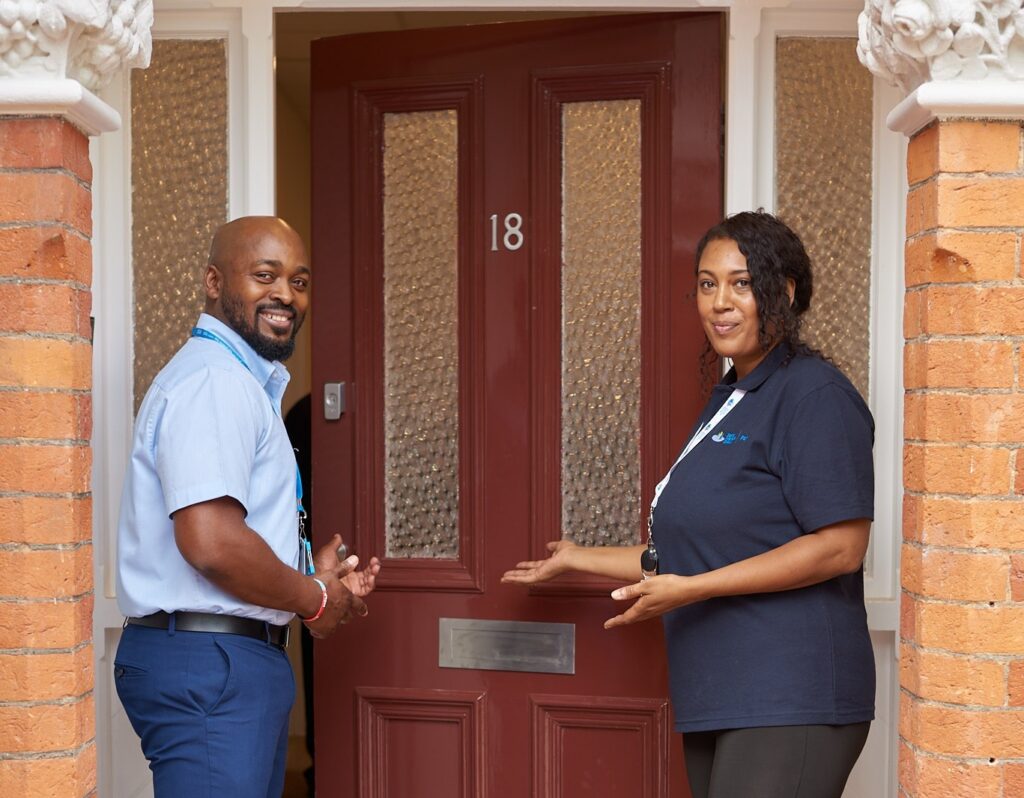
A new NHS mental health crisis house has opened in Bedford, providing a safe, welcoming alternative to hospital admission for adults experiencing a mental health crisis.
Developed by East London NHS Foundation Trust (ELFT) in partnership with health and social care charity SIG Penrose, the new service at Kelvin Grove, Rothsay Road, will offer 24-hour, short-stay therapeutic support in a homely, non-clinical environment. More information is available on the ELFT website.
Contact us
To contact us, or to unsubscribe, please email our communications and engagement team.