
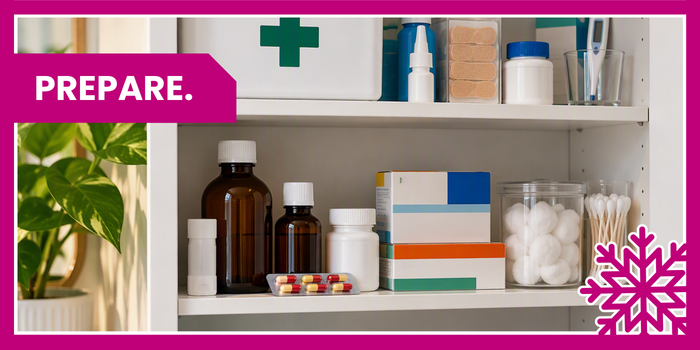
Winter can bring a variety of health challenges, from colds and flu to minor injuries. Having a well-stocked medicine cabinet can help you manage these issues effectively.
Below you will find a list of essential items recommended by the NHS to keep at home during the winter period. If you’re unsure what you need, visit your local pharmacy. Your pharmacist can offer advice on medicines and products that may help you manage common winter illnesses and minor health concerns.
Pain relief and fever reducers
- Paracetamol: Effective for pain relief and reducing fever.
- Ibuprofen: Useful for pain relief, reducing inflammation, and fever.
Cold and flu treatments
- Decongestants: Help to relieve a blocked nose.
- Cough syrup: Choose based on whether you have a dry or chesty cough.
- Throat lozenges or sprays: Soothe a sore throat.
- Vapour rub: Helps to ease nasal congestion and soothe a cough.
Digestive aids
- Antacids: Relieve indigestion and heartburn.
- Antidiarrhoeal medication: Helps to manage diarrhoea.
- Oral rehydration salts: Useful for rehydration after diarrhoea or vomiting.
First aid supplies
- Plasters and bandages: For minor cuts and injuries.
- Antiseptic cream or spray: Prevents infection in cuts and grazes.
- Thermometer: To monitor body temperature accurately.
- Tweezers: Useful for removing splinters.
Miscellaneous items
- Moisturiser: Prevents and treats dry skin.
- Hand sanitiser: Helps to prevent the spread of germs.
- Saline nasal spray: Helps to keep nasal passages clear.
Using medicines safely
Always read the label and take medicines as directed. If you’re unsure whether a medicine is suitable for you, or have questions about over-the-counter medicines, ask your local pharmacist for advice.
Check expiry dates regularly and don’t use medicines that are out of date. Unwanted or expired medicines can be taken to a pharmacy for safe disposal.
Find out more how community pharmacists can help you
You can also use the NHS App to access healthcare advice and service information.
The NHS.uk website also has a health A-Z, which is a complete guide to conditions, symptoms and treatments, including what to do and when to get help.