
Our health is directly linked to the environment we live in.
According to the World Health Organisation “climate change is the single biggest health threat facing humanity“.
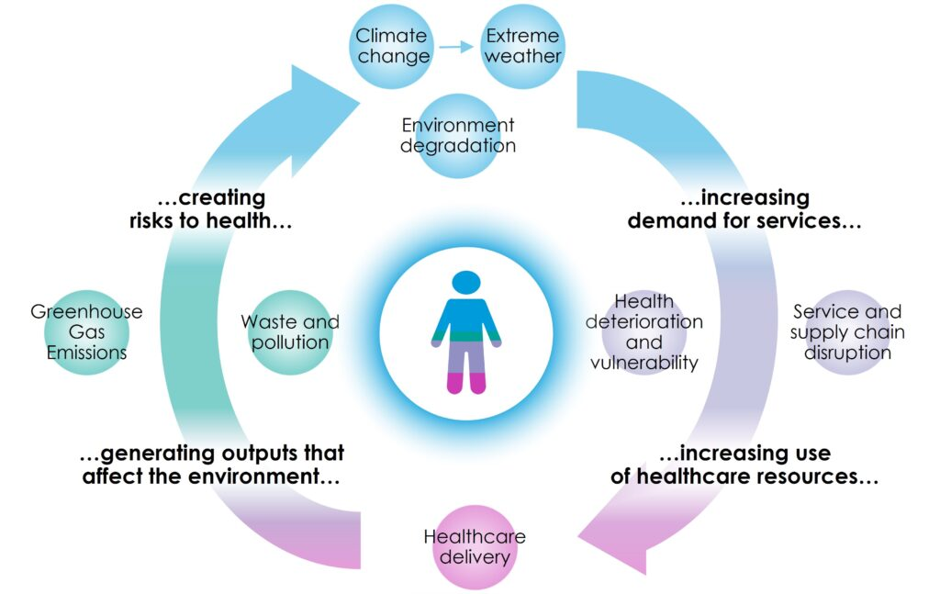
Healthcare services generate emissions and pollution, which drives climate change and environmental degradation. This impacts on our health and disrupts services, leading to a greater use of healthcare resources.
Through its Environmental Sustainability policy, Central East ICB is working to embed the principles of sustainable healthcare and other environmental considerations into its strategy and approaches.
What is sustainable healthcare?
Our health is inextricably linked to the health of the environment and the planet. This is why the climate and nature crises are a health crisis: climate change and environmental degradation exacerbate existing health conditions, create new health challenges, worsen population health, drive health inequalities, and, through extreme weather events, result in harm and disruption to day-to-day healthcare provision, particularly for the most vulnerable.
What is Climate change and environmental degradation?
Climate Change occurs when the atmosphere, oceans and other “ecosystems” are no longer able to maintain a balance. In the case of modern man-made climate change, release of greenhouse gases means our planet is unable to maintain its usual average temperatures – this means the planet is warming up.
While warming temperatures might seem like a good thing, we are increasingly likely to see extremes – summer heatwaves and droughts, severe flooding, more-frequent and more-powerful storms. These will affect our health and how we live.
Environmental degradation is where natural systems cannot cope with levels of pollution, resulting in ecosystems no longer supporting life in the same way – polluted water ways, particulate matter in the air, more acidic oceans, and nutrient-poor soils are some examples.
Why does the environment matter to health?
A changing climate will bring risks to our health and wellbeing, particularly for the more-vulnerable:
- more extreme weather (heat, cold, floods, storms)
- worse general health and exacerbated existing conditions
- establishment of tropical diseases to the UK
- pressure on livelihoods, such as farming
- danger to our nature and wildlife
- disrupted supply chains and shortages in consumables and medicines.
This increased risk to health will increase pressure on our healthcare services and staff, through higher demand, more expensive supplies, and more challenging working conditions.
How do healthcare organisations contribute to Climate Change?
Healthcare contributes 4-5% of the UK’s greenhouse gas emissions. The biggest single sources of emissions we can control are:
- Energy
- Travel
- Anaesthetics and inhalers
However, approximately 69% of the carbon footprint is directly linked to how we deliver care and pathways, including:
- Medicines use and waste
- Equipment, infrastructure and digital
- Consumables
What can the NHS do about it?
In 2020, the NHS became the world’s first health system to commit to net-zero emissions, aiming to be net-zero by:
- 2040 for emissions we control (e.g. from energy, water, waste, anaesthetic gases, business travel)
- 2045 for emissions we can only influence (e.g. supply chain, staff commuting)
The Sustainable Healthcare Principles tell us that the best approaches are (in order of impact):
- Increase preventative healthcare and help people look after themselves, to reduce the need for high-intensity healthcare
- Improve the effectiveness and efficiency of services, to get best value out of the resources we use, and minimise waste
- Switch to low-carbon alternatives to care models and consumables.
Individual NHS Trusts have developed Green Plans to meet the net zero ambition.
The ICB will support the same goals by enacting its Environmental Sustainability Policy, which sets out commitments to meet statutory duties related to climate change and the environment, as well as protecting vulnerable people and organisations from the effects of environmental degradation. This will mean making sure the ICB lowers its own carbon footprint, and considers environmental risks and impacts in the planning, design and commissioning of services.